DATE
06/01/2025
Launching a 23,000+ SKU Marine Catalog From Zero Without Breaking Google
This project involved an Australian-based operator in the marine spare parts niche who already owned and successfully ran more than five established e-commerce stores.
Rather than competing with those stores, the decision was made to launch a new standalone domain designed to host the full overseas supplier catalog of more than 23,000 SKUs as a reference and expansion layer.
The goal was not aggressive growth.
The goal was structural legitimacy.
What followed was one of the most operationally demanding projects Valocommerce has handled.
E-Commerce
Shopify
+23,000 SKUs


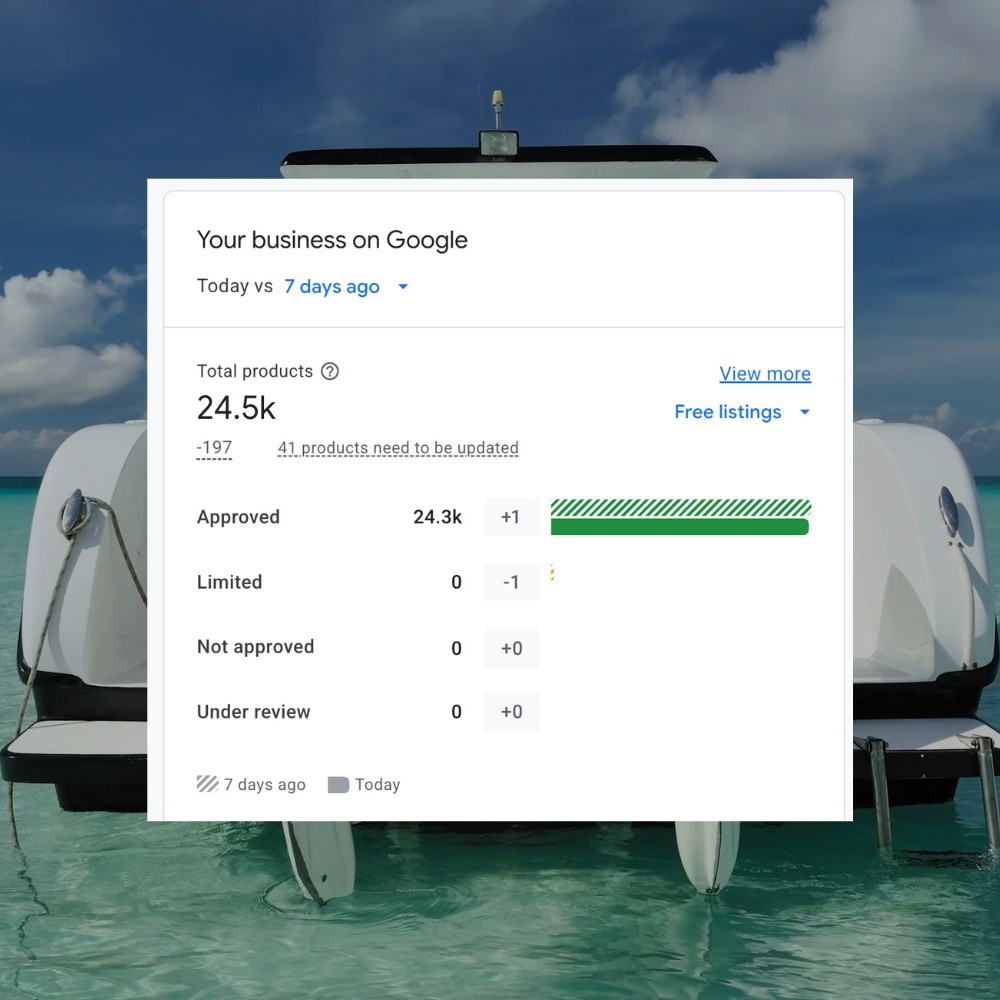
The Initial Setup
The store was launched quickly through the client and the developer.
The website design was completed, and they submitted a product feed to Google Merchant Center immediately after launch.
The problem was the feed itself.
At submission, the catalog looked like this:
SKU only
Basic URL
Generic, non-descriptive product titles
No differentiation between products
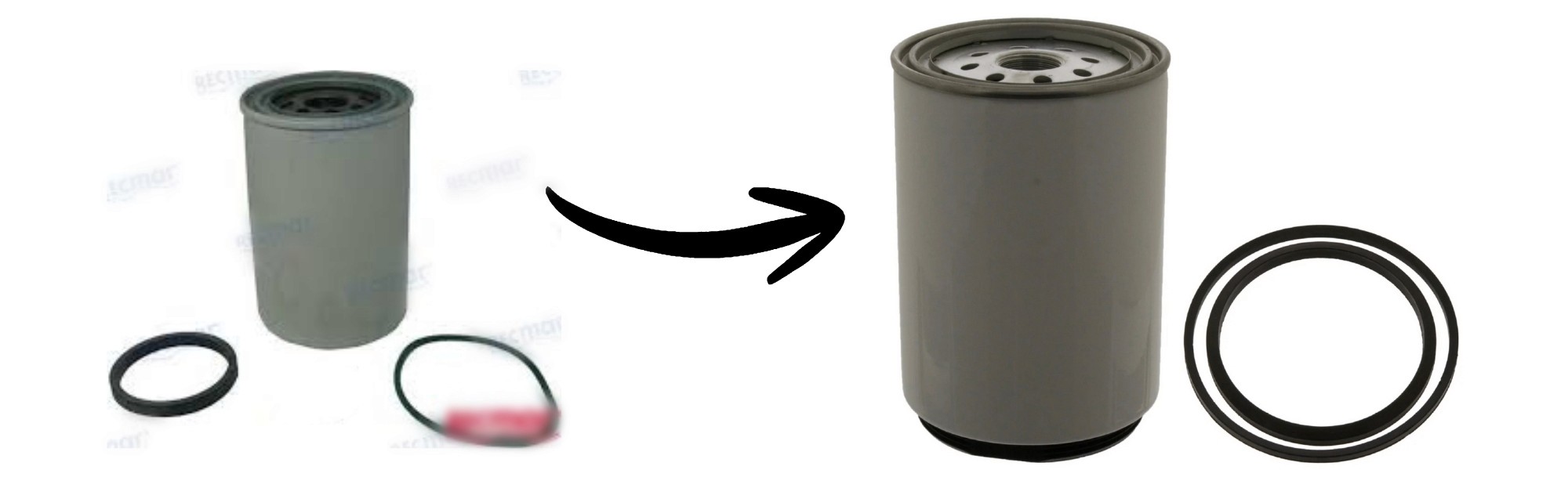
Supplier-provided images with watermarks
In other words:
A catalog-sized feed with no semantic value.
What Broke (and Why)
Shortly after submission:
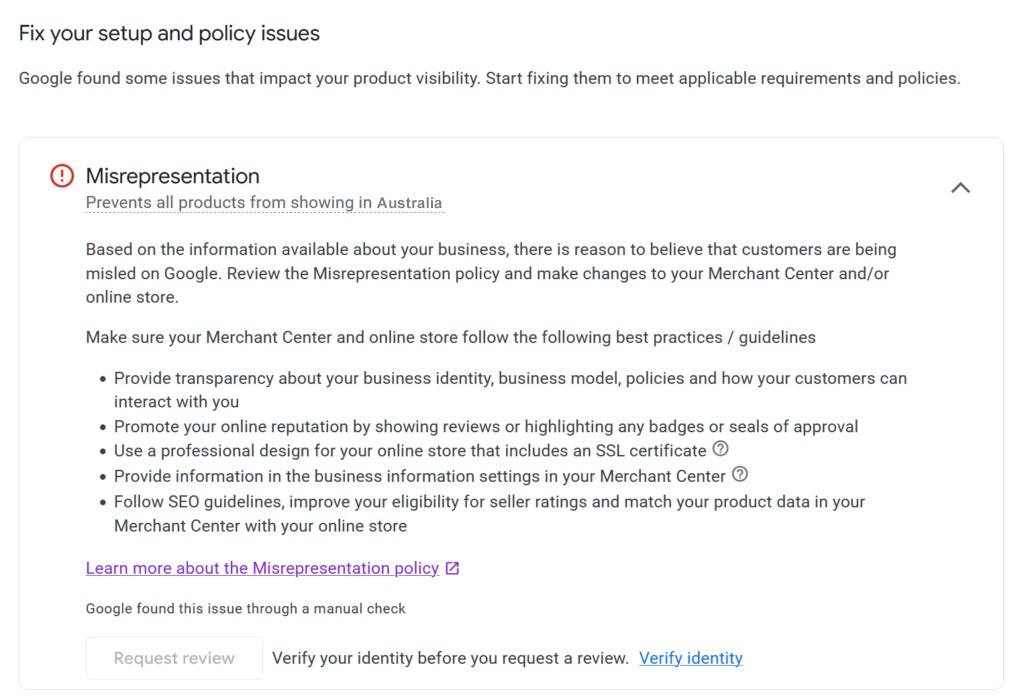
Google Merchant Center account was suspended for Misrepresentation
Google Search Console showed ~25,000 unindexed pages
Organic visibility was effectively zero
Product pages existed, but Google could not trust or understand them
This is a textbook failure mode for large catalogs launched without structure.
The VALO Audit: Root Cause Analysis
We stepped in after suspension.
Through a full VALO Audit, we made the underlying issue clear:
You cannot launch a 23,000 SKU catalog without unique, meaningful differentiation at product level.
From Google’s perspective:
Pages were duplicative
Titles were useless
Images violated policy
Intent signals were absent
The site looked auto-generated and low-quality
This wasn’t a “policy issue.”
It was a system design failure.
Because the client already trusted us across five other stores, they agreed to a full reset.
No shortcuts. No partial fixes.
The Decision: Full Catalog Clean-Up
Catalog Structure & Navigation
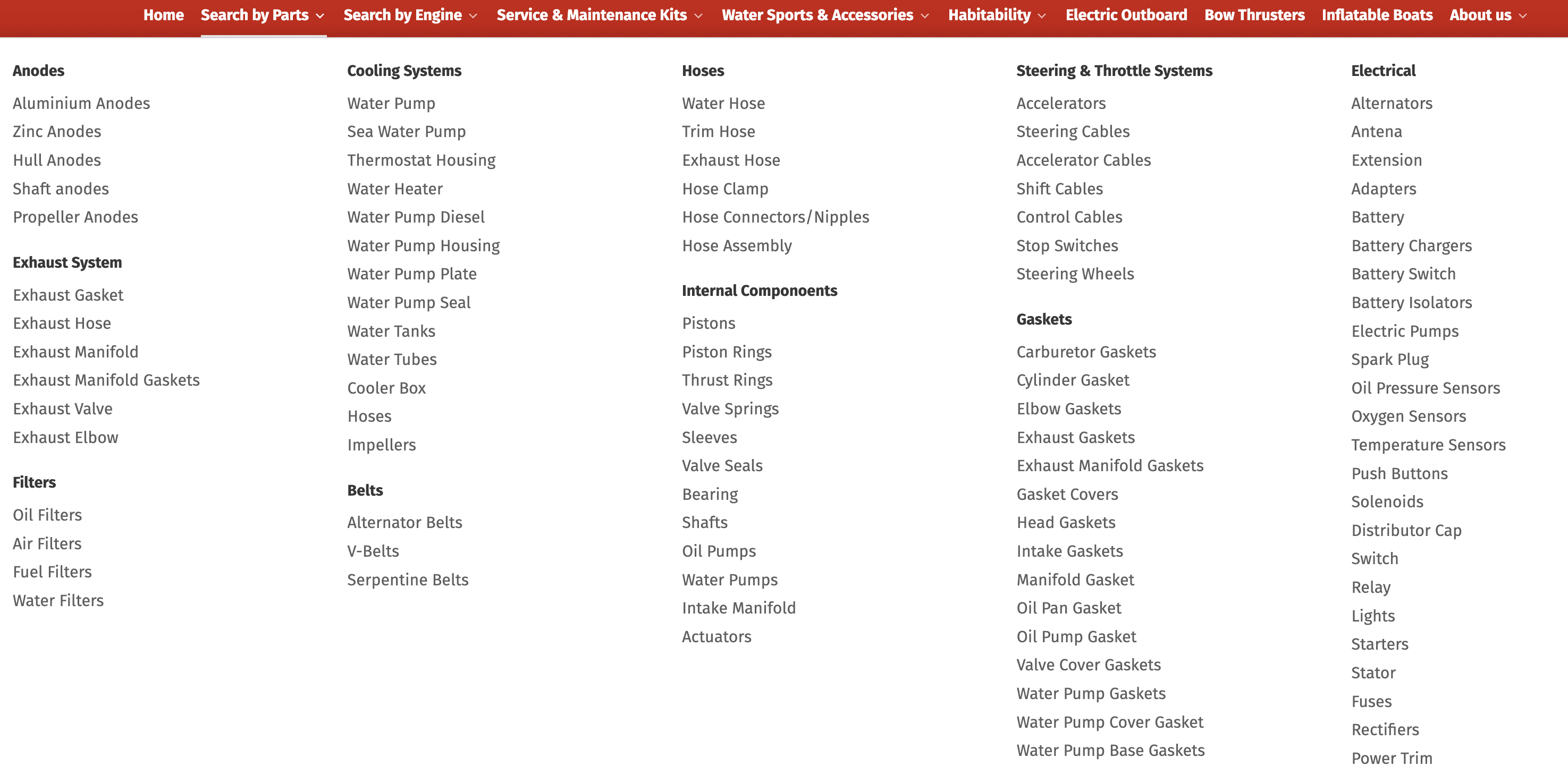
Once individual products were legitimate, we addressed structure:
Built collection pages based on real-world marine categories
Used tags to systemize categorization across thousands of products
Ensured internal linking made sense at scale
Prevented cannibalization between similar products
This allowed Google to understand how the catalog is organized, not just that it exists.
Merchant Center Recovery
After full optimization:
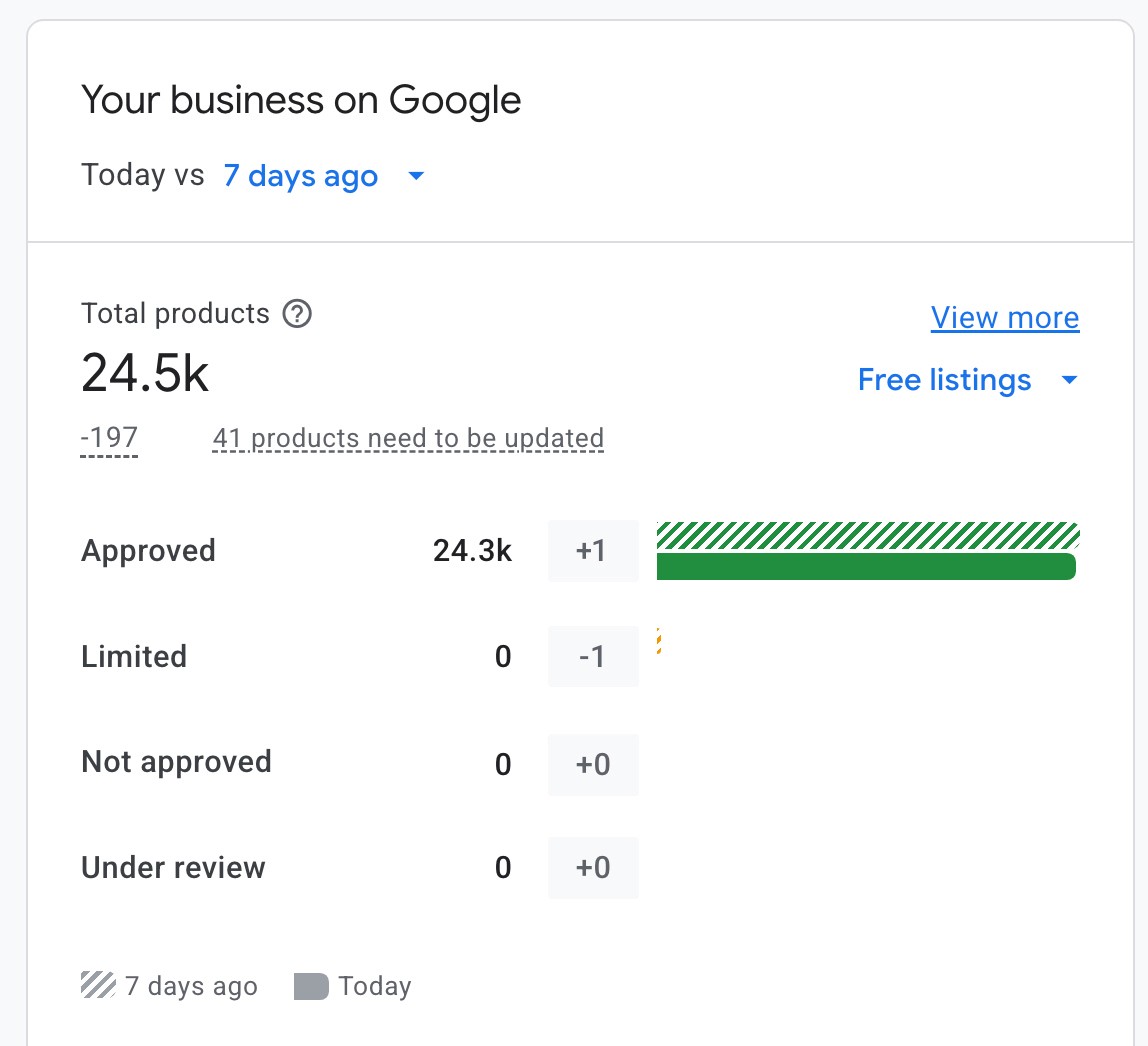
A detailed appeal was submitted to Google Merchant Center
The account was reinstated
The majority of products were approved successfully
This was not luck.
It was the result of structural compliance.
Organic Outcome (Measured, Not Inflated)
This project was never designed to be an SEO growth engine.
Its role was:
To act as a full-catalog reference
To redirect users from the other five stores when needed
To avoid competing with already-dominant properties
That said, results were still measurable:
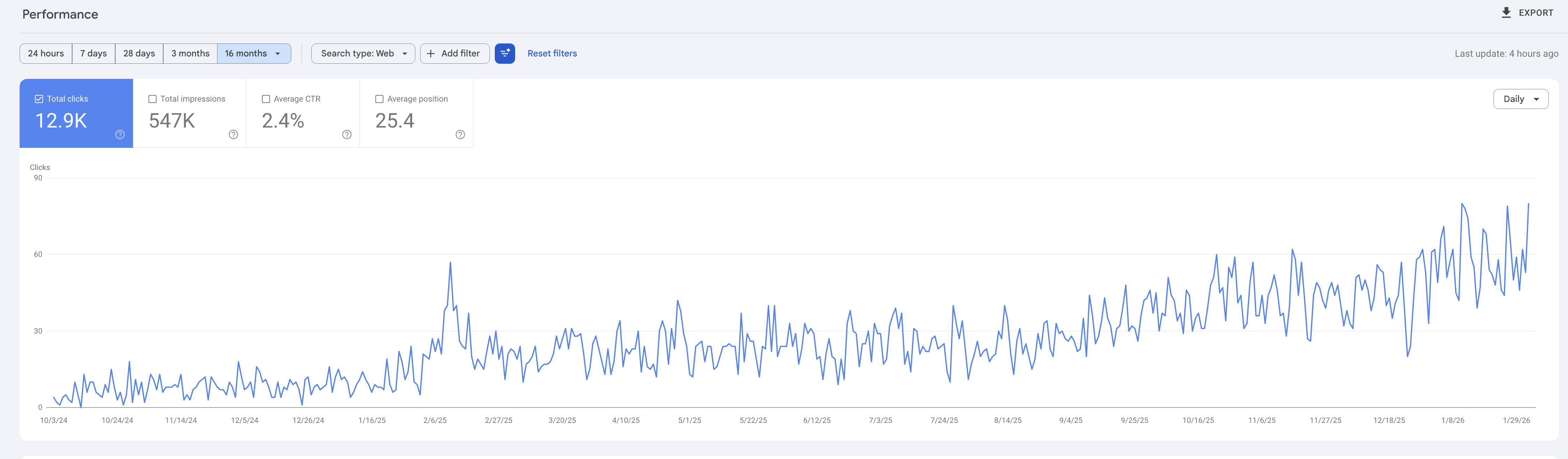
Organic traffic grew from 0 daily clicks to ~70 clicks/day
All core product pages became indexed in Google Search Console
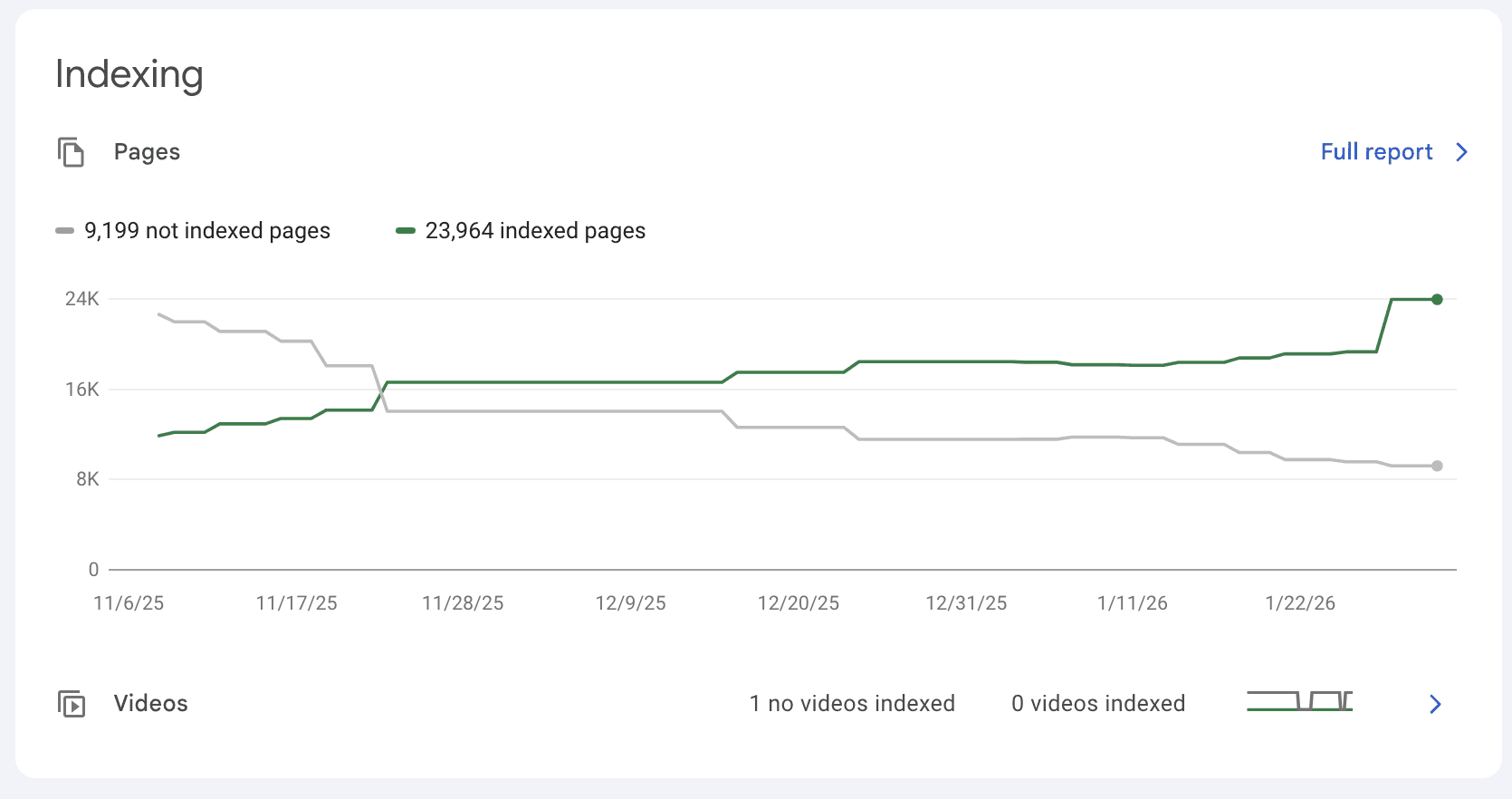
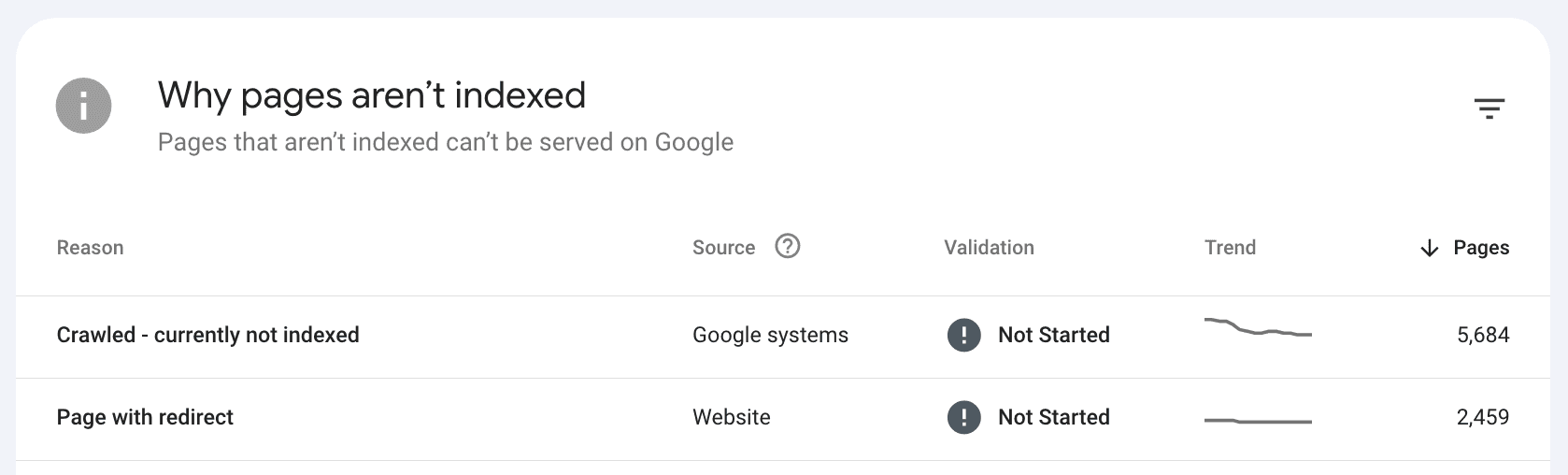
At first glance, you might wonder why GSC shows ~9,000 unindexed pages.
The majority were marked as “Alternate page with proper canonical tag”
Others were redirected pages due to URL handle changes
This is completely normal behavior “especially on Shopify stores” and not a performance or quality issue.
Why This Project Matters
This case study isn’t about growth charts.
It’s about this insight:
Large catalogs don’t fail because of size.
They fail because of laziness at scale.
Google does not reward volume.
It rewards legitimacy, differentiation, and intent clarity.
This project proves that even the most broken-looking catalogs can be recovered if you’re willing to do the work properly.

FAQs
Frequently
Asked Questions
Have questions? Our FAQ section has you covered with quick answers to the most common inquiries.
Is this approach suitable for any large catalog store?
Why was manual work necessary instead of automation?
How long does a project like this typically take?
How much does it cost to fix a catalog at this scale?
Why wasn’t the goal aggressive traffic growth?